Texture Paint for Living Room: How to Choose and Use It Effectively
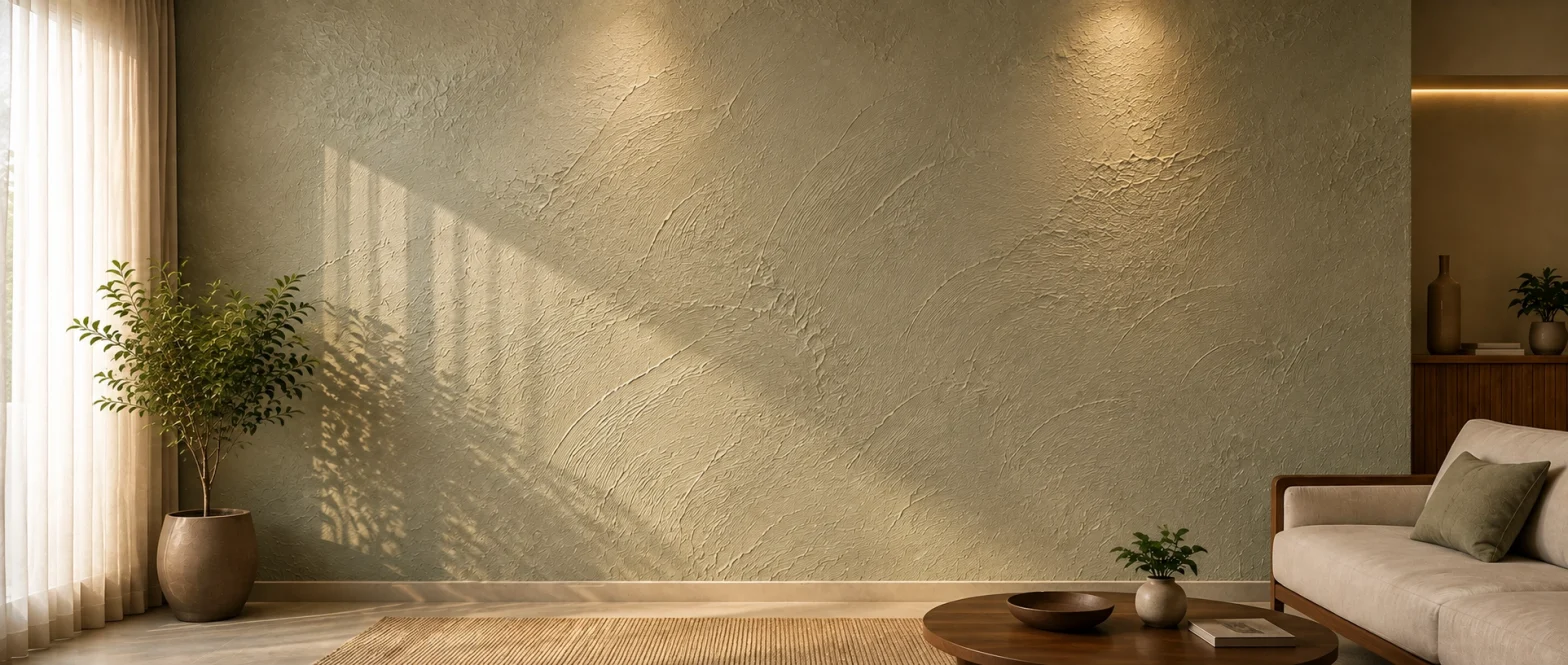
Flat emulsion on a living room wall does one thing: it gives the wall colour. Texture paint for living room walls does that and more. It creates a surface that has depth, catches light differently throughout the day, and introduces a quality that flat paint can’t approximate regardless of how good the colour or finish is. A living room with well-executed texture on a feature wall looks like someone made considered decisions. A living room with only flat paint rarely achieves that quality.
The caveat: texture applied without understanding the room creates more problems than flat paint would have. The wrong finish in the wrong room looks busy and draws attention to the wall rather than the room. The wrong application technique dates quickly. What follows is the practical guide.
Wall Texture Design for Living Room: What Type of Texture and Where
The first decision is whether the texture is going on all four walls or on a feature wall. In most Indian living rooms, the answer is one feature wall. Four textured walls in a living room requires very careful management of both the texture type and the colour. Most texture finishes at full-room scale create visual noise rather than visual interest. One feature wall with the other three in flat emulsion. This is consistently the version that works.
Which wall: the wall behind the primary seating, the wall opposite the entrance, or the wall the television sits against. The feature wall should be the one the eye lands on when entering the room. In most Indian living rooms, this is either the TV wall or the sofa backing wall.
Stone and Rock Finish Textures
Stone and rock finishes like Patternz RockTex from JK Maxx create rugged, natural-looking facades for a bold architectural feel. In a living room, a stone-effect texture on one wall creates a surface that reads as architectural rather than decorative. Architectural texture looks like it belongs to the structure of the room. Decorative texture looks like something was done to the room afterwards.
Stone-effect textures work best in living rooms with high ceilings or substantial wall areas. In a compact living room, the visual weight of a stone effect can make the room feel smaller. The colour choice within the stone finish also affects this: lighter stone tones open the room, darker tones close it.
Rustic and Earthy Textures
The Rustic Regular and Rustic Fine finishes from JK Maxx create a plaster-effect surface. Warm, slightly uneven, with a quality that references traditional Indian wall finishes without looking dated. This is the texture finish that sits most naturally alongside teak furniture, terracotta, jute, and the warm natural materials that Indian living rooms typically have.
Rustic texture on the TV wall or the sofa backing wall, with flat emulsion in a warm off-white or warm grey on the other three. The texture provides the visual interest without the room needing significant styling to look complete.
Artistic and Pattern Textures
The JK Maxx Artisté range offers elegant finishes perfect for living rooms, creating a warm, inviting feel through sophisticated and elegant patterns. Artisté finishes are the customised end of the texture range. Layered applications, pattern work, and artistic finishes that make the feature wall genuinely unique. Each Artisté application is slightly different, which is the point. The wall looks handcrafted rather than manufactured.
This is the texture finish for a living room where the feature wall should be a statement rather than a backdrop. It requires a skilled applicator and takes longer than standard texture application. The result is a wall that doesn’t look like anything you could specify from a catalogue. That’s what makes it work as a premium feature.
Granular and Multi-Tone Textures
MultiGranite and Granitetone from JK Maxx create surfaces with subtle granular depth. The texture is visible on closer inspection but reads as a rich, slightly dimensional surface from across the room. These finishes work well in formal living rooms where the texture should enhance the wall quality without announcing itself.
Granular finishes are also more forgiving on walls with minor surface imperfections. The texture absorbs small unevenness that flat paint would highlight.
Texture Wall in Living Room: Practical Considerations
Preparation
Texture paint requires better surface preparation than flat emulsion. Any significant cracks, holes, or surface irregularities need to be repaired before texture application. Hairline cracks in the substrate will telegraph through most texture finishes and be visible, particularly in raking light. The JK Maxx texture range includes crack-bridging properties that handle minor hairline cracking. Significant substrate issues need addressing first regardless.
Lighting
Texture paint and lighting have a specific relationship that flat paint doesn’t. Texture creates shadow at micro scale, and those shadows shift with the direction and quality of light. In a living room, this means the textured wall looks different in the morning under natural light, in the afternoon under direct sun, and in the evening under warm artificial light. Test how the texture looks under your actual living room lighting before committing. Most people experience the wall primarily under evening artificial light and that’s the condition that matters most.
Warm-toned artificial light enhances rustic and earthy textures. Cool-toned light flattens the shadow effect. The texture reads as less dimensional. Most Indian living rooms run warm-toned LEDs in the evening, which is good for texture finish performance.
Colour Choice
Texture paint in a neutral colour, warm white, warm grey, stone, or terracotta, performs better than texture in a saturated colour for living room feature walls. The texture itself is the visual element. Adding a strong colour to it can create a wall that does too much at once.