Metal Paint: The Practical Guide toPainting Gates, Grilles and Metal Surfacesin Indian Homes
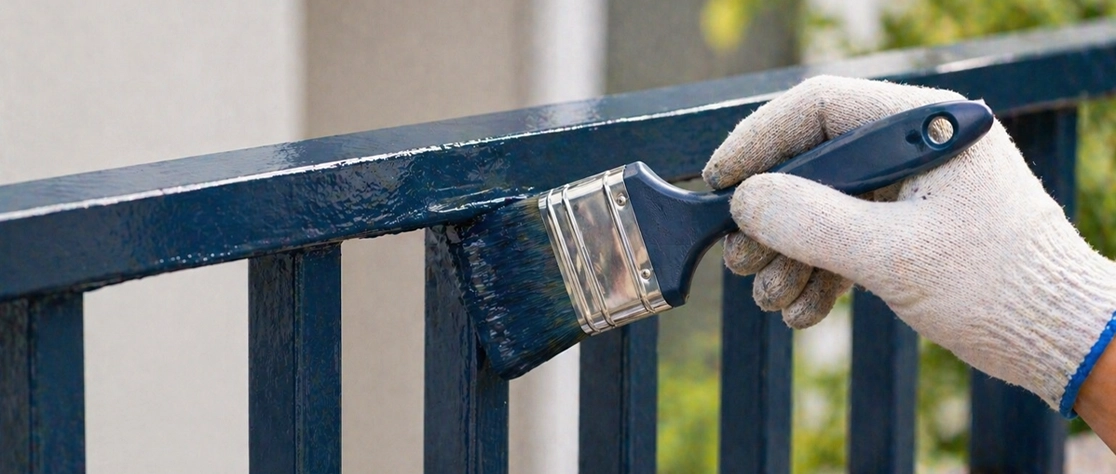
Metal surfaces in Indian homes get painted badly more often than any other surface. Someone buys a tin of paint, applies it directly to the metal gate or grille, it looks fine for a few months, and by the first monsoon it’s bubbling, peeling, or rusting through from underneath. The paint did not fail. The process failed. Metal surface preparation and primer application are not optional steps. They are what determines whether the paint lasts.
This guide covers metal paint for the surfaces Indian homes actually have: compound gates, window grilles, staircase railings, decorative ironwork, and metal furniture. The product choices are straightforward once you understand what each step is doing.
Metal paint is not the same category as wall emulsion. Metal surfaces present specific challenges that emulsion is not formulated for.
Metal expands and contracts significantly with temperature changes. In Indian summers, a metal gate in direct afternoon sun can reach temperatures that would crack a standard paint film. Metal paint, specifically synthetic enamel, is formulated with harder, more flexible bindershat handle thermal cycling without cracking.
Metal surfaces oxidise. In the presence of moisture and oxygen, iron and steel develop rust. Once rust begins under a paint film, the paint lifts from below and the surface fails progressively. Metal primer with rust-inhibiting properties is what prevents this from starting.
Metal surfaces have poor adhesion characteristics for paint. Unlike plaster or wood, metal is non-porous and smooth. Paint applied directly to bare metal without primer has limited mechanical bond and poor chemical adhesion. The first expansion-contraction cycle lifts it.
Metal primer paint does three things that topcoat enamel alone cannot. It creates a mechanical and chemical bond between the metal substrate and the topcoat. It contains rust-inhibiting pigments that prevent oxidation from starting at the substrate level. And it creates an even, smooth base that allows the topcoat to apply at consistent film thickness.
Applying enamel directly to unprepared metal is the most common reason metal paint jobs fail within a year. The paint is fine. The absence of primer is the problem.
For iron and steel surfaces, gates, grilles, railings, an oil-based metal primer is the standard starting point. Aluminium and galvanised steel need a specific etch primer or self-priming enamel. Standard oil-based primer doesn’t adhere to these substrates the way it does to iron and steel.
Primer applied over rust, scale, or oil contamination won’t bond. The surface needs preparation first.
Remove existing rust mechanically with wire brushing, sanding, or grinding. Surface rust that’s flaking or loose must come off completely. Stable surface rust that hasn’t started lifting can go through a rust converter before priming. Rust that’s flaking or lifting needs to come off mechanically first.
Wipe the surface with a solvent or degreaser to remove oil, grease, and handling contamination. Even fingerprints are enough to compromise primer adhesion on a clean metal surface.
For existing painted metal surfaces that are sound and well-adhered, light sanding to break the gloss is sufficient preparation before repainting. For surfaces with failing or peeling paint, remove the failing paint back to a sound edge before repriming.
Enamel paint for metal surfaces is oil-based and cures harder than emulsion. It resists abrasion, impact, and moisture at a level wall emulsion wasn’t built for. The high-gloss finish of most synthetic enamels is both aesthetic and functional. The smooth, hard surface sheds water. The glass-like finish slows down surface oxidation at the paint film level.
JK Maxx produces synthetic enamel in the Enamelo range. JK Enamelo Synthetic Enamel for standard gloss applications and JK Enamelo Premium Satin Enamel for surfaces where a semi-gloss finish is preferred. The Red Oxide Primer and White Primer ST from JK Maxx are the standard metal primers for iron and steel surfaces.
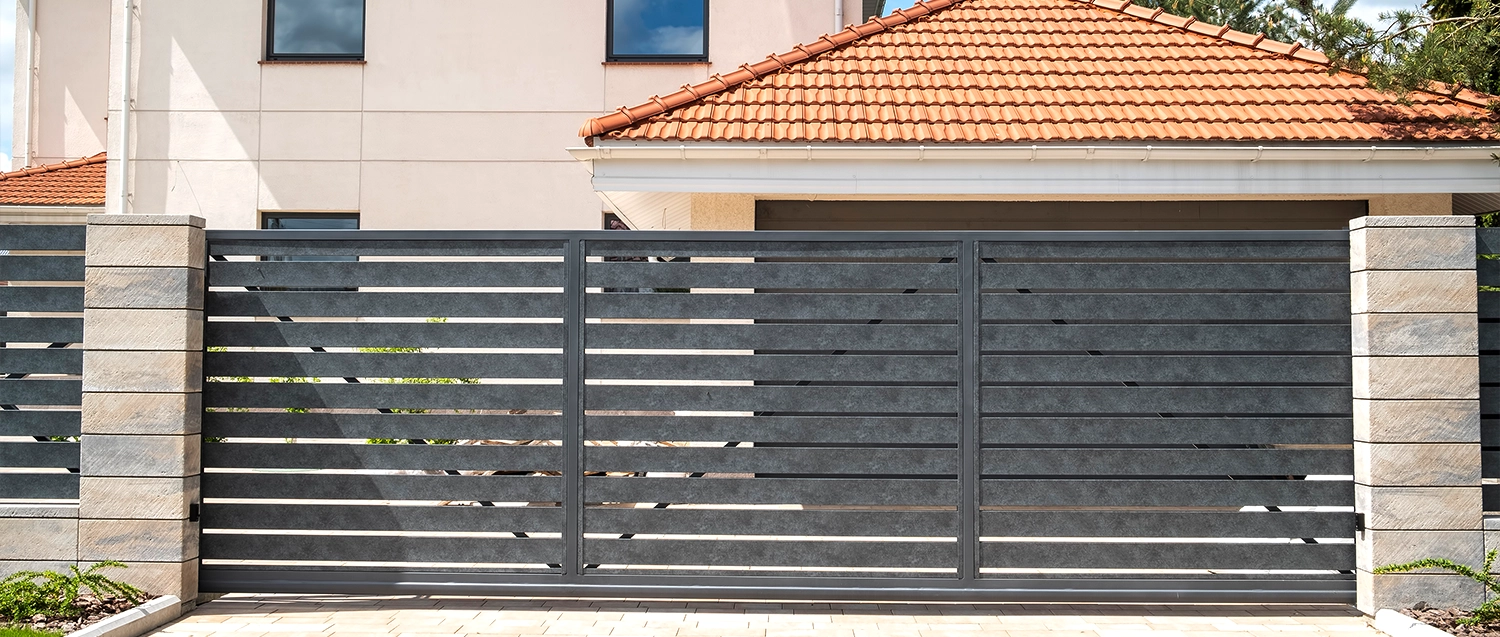
The highest-exposure metal surfaces in most Indian homes. Direct sun, monsoon rain, road dust, and pollution. JK Maxx Red Oxide Primer or White Primer ST as the base, then two coats of JK Enamelo Synthetic Enamel over the top. Black and dark greys hide surface dust better than whites and light colours on boundary metalwork. Recoat every 3-5 years before rusting begins at the primer level.
Often neglected because they are less visible. Metal window grilles that rust through create structural issues and are expensive to replace. Same primer-plus-enamel process as gates. Interior-facing grilles in well-ventilated rooms can be recoated less frequently. Grilles in humid environments like bathrooms and kitchens need more frequent attention.
High-contact surfaces that take more mechanical abrasion than gates and grilles. Good surface preparation and a hard enamel topcoat are particularly important here. Check and recoat at wear points before rust can establish.
Outdoor metal furniture, chairs, tables, plant stands, needs the same primer-plus-enamel approach as gates. Indoor metal furniture in dry conditions can be treated with a single primer coat and single topcoat if the original paint is removed. Metal powder-coat finishes that are undamaged don’t need repainting. Only areas where the powder coat has chipped or cracked need attention.
Only with a rust converter product applied first. And only on stable surface rust. Rust that is lifting or flaking needs to come off before anything goes on. Rust converter chemically converts iron oxide to a more stable compound that can bond with primer. But this is a stop-gap measure for surfaces with minor surface rust. Significant rust, pitting, or loose scale requires mechanical removal before any paint is applied.
Good surface preparation, appropriate primer, and two coats of JK Enamelo Synthetic Enamel. An exterior gate maintained this way should hold for 4-6 years before recoating is needed. Without primer, 12-18 months is typical before rust and peeling begin. The preparation process is the determinant.
Black gloss enamel on gates that were originally black is the most practical choice. Touch-ups blend and surface rust and dirt are less visible between repaint cycles. Dark grey is an alternative. Avoid white or light colours on compound gates in high-dust environments. The surface shows dust and minor corrosion markedly.