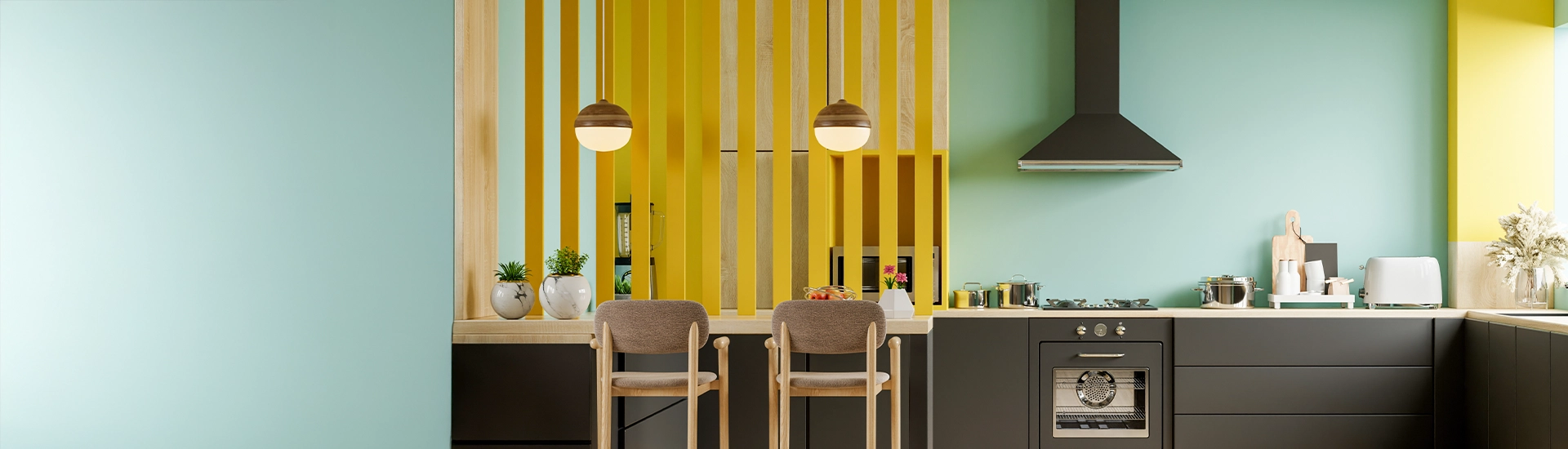
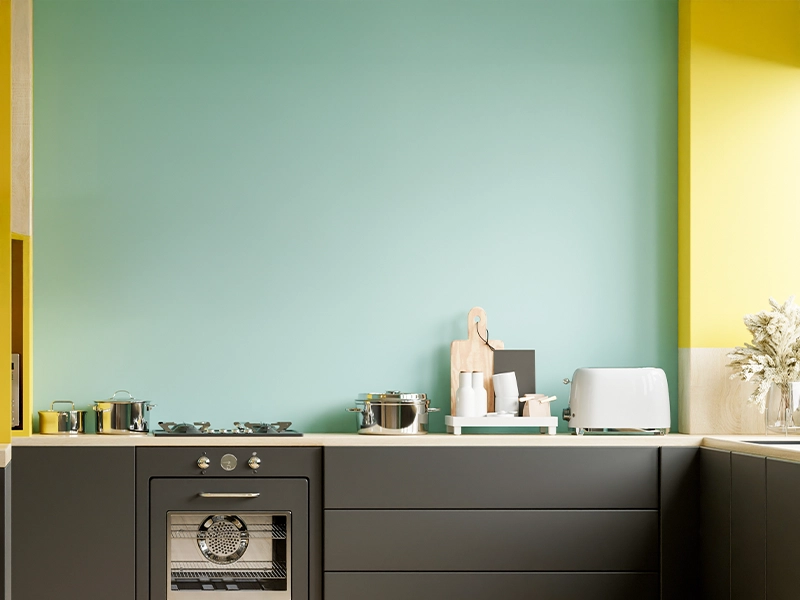
The kitchen gets treated differently from every other room when it comes to paint. People either default to white out of habit or spend so long worrying about practical concerns that they never make a decision at all. Both approaches leave kitchens looking more utilitarian than they need to. A kitchen wall is different from every other wall in the house. The heat, the steam, the lighting conditions, the cleaning requirements. Get the paint colour for kitchen walls right and most of those problems solve themselves.
A kitchen wall takes more heat, more steam, more cooking marks, and more light changes than any other room. The paint colour for kitchen walls needs to handle all of that.
Warm colours generally perform better in Indian kitchens than cool ones. Most Indian kitchens run warm artificial lighting in the evenings. Turmeric yellow, incandescent, or warm LED. Cool colours like blue-grey or stark white under warm lighting shift in an uncomfortable direction. Warm off-white, sage green, soft yellow, warm beige, and terracotta all handle warm lighting without shifting.
Finish matters more here than in any other room. Matte walls in a kitchen pick up grease and cooking marks and can’t be properly wiped. Satin or semi-gloss on kitchen walls. The slight sheen means the wall can actually be wiped down.
The most consistently successful kitchen wall colour in Indian homes. Paper Moon, Flax Straw, or Vanilla Custard from JK Maxx on kitchen walls with white tiles above the counter and wooden cabinetry below. This combination has been working in Indian kitchens for decades. Warm artificial light suits it. Light cooking marks are less visible than on stark white. The colour reflects back the evening light rather than going flat under it. And it sits naturally alongside the timber, brass, and stone that most Indian homes already have.
Stark white kitchens photograph beautifully. In person, under Indian kitchen lighting conditions, the clinical quality can start to show. Off-white handles the practical realities better.
Green kitchens have been appearing in Indian home interiors consistently for several years. Sage green or olive on kitchen walls with white tiles, wooden shelves, and brass cabinet handles. The earthy quality of sage hides light marks better than white. The colour reads as fresh without being cold. Terracotta tiles, stone counters, warm timber. Sage sits with all of these without any management.
Pale Ivy or Herbal Garden from JK Maxx with white tiles and open wooden shelves. The room looks like someone thought about it and also like it was always going to be that way. For a smaller kitchen, stay with the lighter sage shades. Deeper olive absorbs light and a compact kitchen starts to close in.
Yellow on kitchen walls gets avoided. Usually because people are picturing the wrong shade. The sharp lemon end rather than the warm buttery range. Cornbread or Caramel Kiss from JK Maxx, shades that read as a warm neutral with a yellow quality rather than obviously yellow, in a kitchen with white tiles and dark timber.
Yellow in a kitchen responds particularly well to the warm artificial lighting that most Indian kitchens run on in the evenings. The warmth in the wall and the warmth in the light find each other. The room feels occupied rather than just lit and functional.
Small kitchen paint colors have one job above everything else: not make the room feel smaller. Dark shades in a compact kitchen fail that job fast.
Navajo White, pale sage, soft yellow in a small kitchen. They reflect light without adding visual weight. A pale sage or a warm off-white in a compact kitchen with good artificial lighting and open shelving. The room looks like a decision was made.
Deep forest green, terracotta on all four walls, anything in the burgundy or dark charcoal range. All of these eat light in a compact kitchen. The space closes in and by lunchtime the room feels smaller than it did when you moved in. Keep the strong colour to the soft furnishings and keep the walls light.
The wall colour and the cabinet colour need to agree on temperature direction. Warm cabinets, teak, walnut, warm white, need warm walls. Cool cabinets, grey-blue, cool white, concrete-finish, need neutral or cool walls. Mismatch the temperature direction between cabinets and walls and the room looks slightly wrong in a way nobody can name.
Dark cabinet colours, deep navy, forest green, charcoal, look best against off-white or warm white walls. The contrast is strong. The warmth in the off-white stops the kitchen from tipping cold. Pair dark modern kitchen cabinets colors with a cool stark white wall and the result feels graphic rather than warm. Good in commercial kitchen photography, hard to cook in every day.
Satin or semi-gloss. Matte or flat finishes absorb grease and cooking marks. They can’t be properly wiped without the paint lifting. Satin has enough sheen that the wall can actually be wiped without the paint lifting. Semi-gloss is even more washable and is worth considering near the hob and sink.
Warm off-white works better than stark white in most Indian kitchens. The warm artificial lighting that Indian kitchens typically run in the evenings interacts differently with warm and cool whites. A warm off-white like Paper Moon reads as clean and warm in the evening. A stark cool white can look grey or slightly fluorescent under the same conditions.
On one wall or on the cabinets, yes. A terracotta or deep olive on a single wall in a kitchen with good natural light gives the room personality without closing it in. Four walls of the same shade is a different situation. The space gets heavier and smaller with every coat. Test on the actual wall before committing to anything dark on all four sides.