Waterproof Exterior Paint: What It Is, What It Isn’t, and What Indian Homes Actually Need
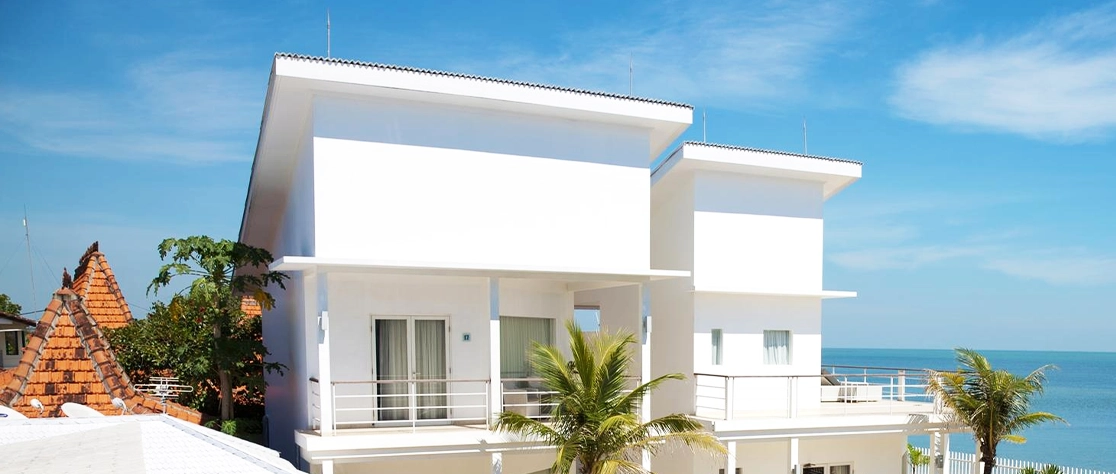
“Waterproof paint” is used loosely by most people selling it and most people buying it. Some products marketed as waterproof are water-resistant emulsions that slow moisture ingress. Others are genuine waterproofing coatings that create a seamless barrier blocking water penetration entirely. These are different products, they do different jobs, and applying the wrong one to a problem doesn’t fix it.
In Indian homes, water-related damage is one of the most common and costly maintenance issues. Roof leakage during monsoon. Damp patches on external walls after sustained rain. Moisture rising from foundations. Bathroom walls showing efflorescence or peeling paint. Each of these requires a different product from a different part of the waterproofing category. The product you need depends entirely on what’s actually happening to the wall.
Bathroom walls take steam, condensation, and direct water contact. In most Indian bathrooms the wall is wet every day. It never fully dries between uses. Standard interior emulsion, even washable grades, handles surface cleaning. It doesn’t handle sustained moisture exposure at the wall substrate level.
Waterproof paint for bathroom walls works at two levels. At the surface, a washable, moisture-resistant emulsion like WipEazy from JK Maxx handles the cosmetic requirements. A washable emulsion on a properly treated bathroom wall wipes clean, handles steam, and doesn’t peel in normal use. Where the substrate is already properly waterproofed, a washable emulsion on top closes the job.
Damp patches, efflorescence, or moisture pushing through the wall mean the problem is at the substrate. Paint on top of that doesn’t solve anything. The substrate needs waterproofing coating before anything else goes on. Maxx Seal from the Waterproofing coatings create a seamless, flexible membrane on the substrate. The JK Maxx JKPROFIX range includes coatings designed specifically for this — Maxx Seal for rooftops and terraces, waterproofing primers and acrylic cementitious coatings for external walls and wet areas. These products go on before the topcoat paint and handle the structural waterproofing function.
For most Indian homeowners, the confusion is between these two categories. An exterior emulsion on a leaking roof changes what the ceiling looks like from below. The water keeps coming in. Genuine waterproofing goes in sequence. First the cracks get repaired with Maxx Crack Repair. Then waterproofing coating: Maxx Seal or acrylic cementitious coating. Then Maxx PrimeBlock primer. Then topcoat emulsion. Skip a step and the next one fails.
Maxx Polymer is the integral waterproofing admixture. Added to cement or plaster mixes during construction, it makes the material itself resistant to water ingress. The substrate does the work, not a coating applied afterwards. Rooftop slabs, boundary walls, and external plaster in high-exposure locations — these are the surfaces where substrate-level water resistance is critical.
Maxx Crack Repair is the first intervention when visible cracking is present. Cracks are the primary entry points for water in exterior walls. Applying waterproofing coating over an unrepaired crack doesn’t solve the problem. The crack continues to move and the coating eventually fails at that point.
Maxx ILWP is the liquid waterproofing compound for concrete work, improving cohesion and preventing water permeability in concrete elements.
For exterior walls where waterproofing is part of the brief but structural leakage isn’t the issue, the JK Maxx exterior emulsion range handles weather protection as a built-in specification.
The premium exterior emulsion with Dust Shield Technology and Therma-Guard (up to 7°C cooler). Handles UV, monsoon cycling, anti-algal and anti-fungal protection, and dust resistance alongside weather performance. 6-year warranty.
Standard premium exterior emulsion. Anti-algal, anti-fungal, weather protection for normal exposure conditions without the dust-specific technology.
High-sheen exterior for applications where gloss level is specified alongside weather performance.
Premium textured exterior finish where texture is required alongside weather performance.
None of these are waterproofing coatings in the structural sense. They’re high-performance exterior paints that handle weather conditions well. For walls with active leakage, they need to go over a correctly waterproofed substrate — not directly on a problem surface.
Maxx Crack Repair for cracks, then Maxx Seal waterproofing coating, then JK Primera Exterior Primer, then exterior topcoat.
Investigate the source first. If it’s surface condensation, a good exterior emulsion handles it. If it’s water ingress through the wall,waterproofing primer and coating is needed before the emulsion.
Remove failed paint, treat any mould, apply Maxx Seal or waterproofing coating at the substrate level, then washable interior emulsion as topcoat.
Maxx Polymer in the plaster and concrete mix, Maxx PrimeBlock as primer, then appropriate topcoat for the surface.
Armour Dust Protec for high-exposure surfaces, Armour for standard exterior repainting.
Waterproof paint gives the surface a moisture-resistant finish. Waterproofing is a construction system: substrate preparation, crack repair, barrier coating, primer, topcoat. One doesn’t substitute for the other. This is the question to resolve before buying anything. For cosmetic protection against weather, a good exterior emulsion is sufficient. For actual leakage problems, a waterproofing system is
required.
No. Moisture in the substrate breaks the adhesion bond. The paint lifts and fails. The substrate needs to be dry and structurally sound before any paint goes on. Moisture in the wall, or a weak substrate, means the paint fails regardless of the product. Painting over a damp wall is a cosmetic exercise. The problem comes back.
JK Maxx JKPROFIX waterproofing products are formulated for long-term durability. The 6-year warranty on Armour Dust Protec covers the exterior emulsion performance. Structural waterproofing with coatings and admixtures, applied correctly, should perform significantly longer. Typically 8-10 years before reapplication is needed, depending on exposure and substrate condition.