How to Choose the Right Wooden Door Paint Colours Finish for Indian Homes
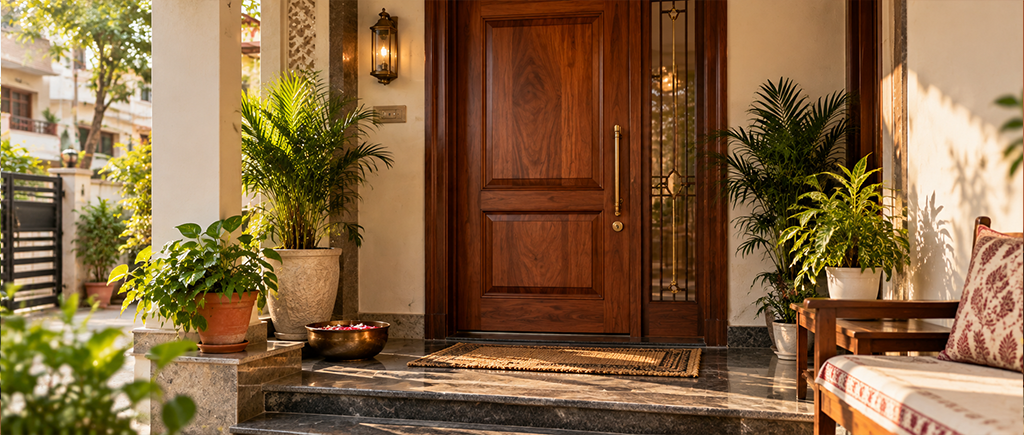
The front door gets judged before anything inside does. It’s also the last surface they touch on the way out. In Indian homes, most doors are teak, sheesham, or mango wood. It takes paint differently than a composite or MDF door. The finish you choose either works with the wood or buries it.
This guide covers the full range of wooden door paint colours for Indian homes. Natural wood finishes, solid enamel colour, home-style matching, and preparation steps.
The finish most appreciated on Indian wooden doors right now is one that shows the wood rather than covering it. Semitransparent finishes that highlight natural grain are making a strong comeback. Indian homes benefit from this more than most. Teak and sheesham are genuinely beautiful timbers.
Natural wood colour paint for doors divides into two types:
Clear PU finish: No colour added. The wood appears in its natural tone with a coat of polyurethane over it. Indian teak without any finish is warm golden-brown. Under a clear PU finish, the teak deepens slightly. It looks expensive because the material is.
Pigmented PU: A PU finish with colour added, tinted to a specific wood tone or a non-wood colour, while still allowing the surface texture of the wood to show. JK Maxx offers wood finish products for this application. JK Cement’s Wood Amore range covers Italian PU formulations in both clear and pigmented versions.
The natural finish is the right call when the timber is high quality, when the door has carved panels where the grain is part of the visual, and when the exterior wall is warm-toned and the natural brown of the wood will sit with it.
When solid colour is specified, for a contemporary brief, for less decorative timber, or when the door has been previously painted, enamel paint for wood is the correct product.
Enamel cures harder than emulsion. It bonds to wood and handles moisture cycling, UV stress, and the repeated contact that Indian front doors take every day. A properly applied enamel door in a classic colour holds for 4-6 years before repainting.
JK Maxx Enamelo Synthetic Enamel for high gloss, Enamelo Premium Satin Enamel for semi-gloss. Enamel on wood requires primer underneath. Skip it and the enamel lifts within the first monsoon.
The door colour reads against the architecture around it. The combinations that work consistently in Indian home conditions:
Traditional Indian home (carved timber doors, ornate frames, warm stone or brick exterior): Teak brown, olive green, or deep maroon in gloss enamel. These colours sit naturally with the materials around them. Deep red and maroon carry auspicious associations at the Indian home entrance. Alongside warm cream or sandstone exterior walls, these combinations don’t look chosen. They look arrived at.
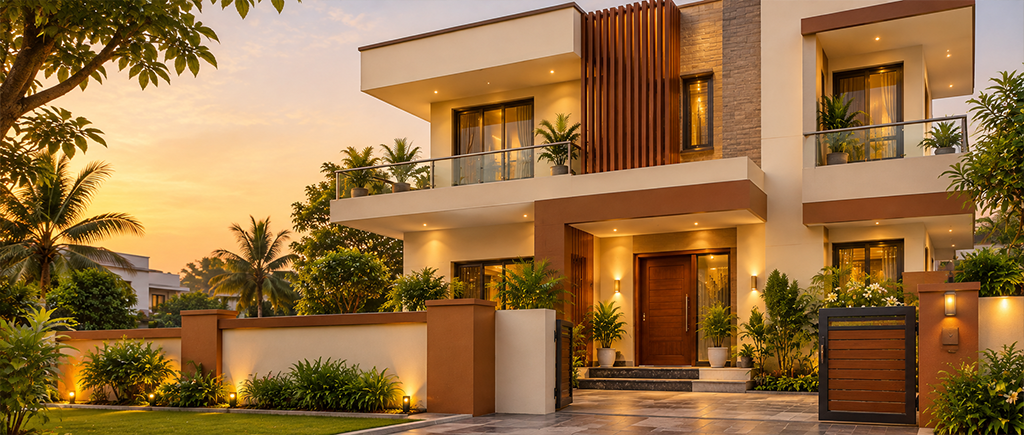
Modern minimalist home (flat facades, clean lines, minimal detailing): Glossy black, dark charcoal, or white oak finish. Deep navy also works. A flat contemporary facade holds these colours without being overwhelmed. JK Maxx Enamelo Synthetic Enamel in near-black or dark charcoal alongside warm grey or off-white exterior walls.
Luxury or premium home: Jet black in very high gloss, walnut-toned PU, or mahogany finish. The sheen level matters as much as the colour. Put the same colour in high-gloss enamel and in satin. They read as two different doors.
Coastal or garden-facing home: Forest green, sage, or sky blue. Forest green works alongside stone pathways and neutral exterior walls. It stays distinct. Garden borders amplify it. It stays distinct without creating visual tension with surrounding greenery.
Traditional village or heritage home: Warm terracotta or brick red on the door is both culturally appropriate and visually correct. These colours sit naturally with rough stone and exposed brick. Lime-washed walls amplify them further.
Door colour shapes how visitors read the entrance before they’ve crossed it:
Warm tones, reds, browns, terracotta, signal warmth and a welcoming entrance. Indian door traditions have used these colours for a long time. The cultural and practical reasons overlap.
Cool tones, blues, greens, sage, create calm and visual balance. These work where the brief is contemporary or the surroundings include garden or stone.
Dark tones, black, charcoal, deep navy, signal strength and modern luxury. These work best on well-proportioned doors with quality hardware.
Neutral tones, white, warm beige, grey, suit minimalist design approaches. These carry the least personality of any door choice. The hardware and surrounding architecture become more prominent.
Painted wooden doors in India fail early for one reason more than any other. Preparation, not product quality.
New timber doors: Sand with medium grit, then go over it again with fine grit. Fill knots and gaps with wood filler. Primer next, exterior-grade wood primer specifically. Two coats of enamel once the primer is dry.
Previously painted doors: Sand off loose or flaking paint. Lightly sand the full surface to break the existing gloss. Wipe clean. Prime any bare or repaired areas. One or two coats of enamel topcoat.
Drying time: Allow full drying time between coats. In Indian humidity, the tin’s stated drying time is optimistic. Most people rush the second coat. That’s where failures start.
Hardware: Remove door handles, knockers, and hinges before painting where possible, or mask carefully. Enamel on brass handles rarely comes off without marking the brass.
Hardware: Remove door handles, knockers, and hinges before painting where possible, or mask carefully. Enamel on brass handles rarely comes off without marking the brass.
Enamel paint for wood. JK Maxx Enamelo Synthetic Enamel for high gloss, Enamelo Premium Satin Enamel for semi-gloss, or JK Maxx wood finish products when a natural or stained appearance is the brief. Always prime before applying enamel. Interior emulsion on a door will not last through Indian seasonal conditions.
For high-quality teak or sheesham, a natural wood colour finish is the better call in most cases. The grain and warmth of Indian timber is what makes the door worth looking at. Solid colour paint covers it. If the door is being repainted over an existing painted surface, solid enamel in a classic Indian door colour, deep red, dark green, or glossy black, is the practical option.
On a properly prepared and primed surface, enamel on a front door holds for 4-6 years. South and west-facing doors receiving direct afternoon sun will be at the lower end of that range. North-facing or shaded doors at the higher end. Touch up chips and cracks as they appear. Left alone, moisture gets in. The deterioration runs from there.