Dust-Resistant Paint: Why Indian Exterior Walls Need More Than Standard Emulsion
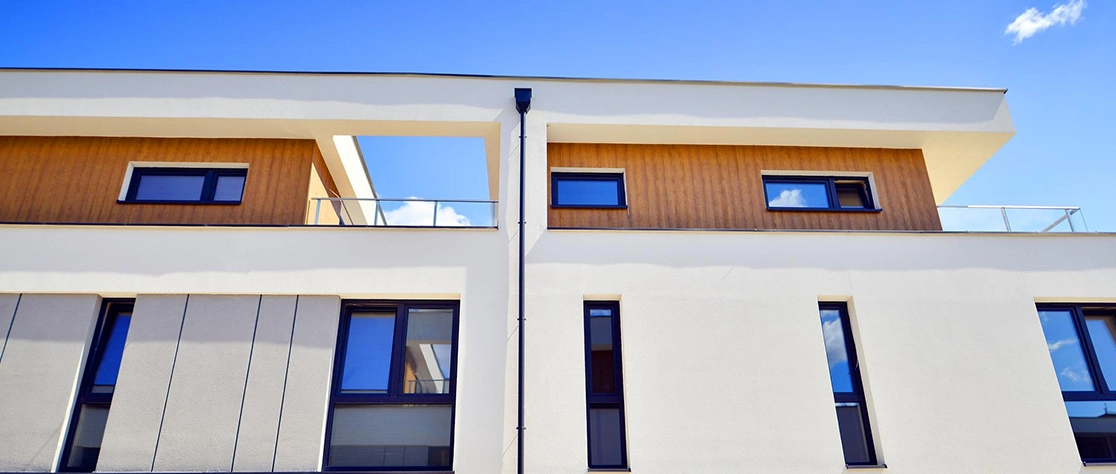
Walk up to most Indian homes after a dry summer month and run your finger along the exterior wall. What comes off is not just surface dust. It’s road dust, industrial particulate, construction debris, and pollution that settles into paint surfaces and doesn’t wipe away. Standard exterior emulsion holds colour and provides weather protection. Dust repellency isn’t part of the specification. Over 18 to 24 months, a standard exterior wall in most Indian cities starts to look grey-brown regardless of what colour it was painted.
Dust-resistant paint is a specific exterior coating category. The technology differs from standard emulsion in a way that shows up within the first year.
Standard exterior emulsion creates a film on the wall surface. Dust particles settle on that film, embed themselves in any microscopic texture or porosity in the surface, and accumulate. Rain may wash some of it off, but between rains — in Indian cities dry periods can be long — the dust stays put.
Dustproof paint with Dust Shield Technology works differently. The coating creates a surface that actively resists dust adhesion. Particulates that land on the wall don’t embed. They sit on the surface and wash off with rain or a light rinse rather than building up over time. The technical mechanism: modified surface energy in the dried film reduces the adhesion forces that allow dust to embed.
JK Maxx Armour Dust Protec uses Dust Shield Technology as its primary specification. The exterior wall stays closer to its original colour between cleaning cycles and needs less maintenance to stay that way.
Indian exterior walls in summer aren’t just cosmetic surfaces. They’re thermal barriers. A dark-coloured exterior wall exposed to full afternoon sun in a north Indian summer can reach 60–65°C. That heat transfers into the building, raises interior temperatures, and increases cooling loads.
Armour Dust Protec includes Therma-Guard Technology, which reflects solar radiation and keeps exterior wall surface temperatures up to 7°C lower than standard exterior paint under the same conditions. For rooms on south and west-facing walls that get direct afternoon sun, this is a meaningful reduction in heat gain. The 7°C figure is a tested performance specification, not a marketing claim.
Most competitor exterior paints don’t offer this, or offer it as a premium add-on. In Armour Dust Protec it’s built in.
Most exterior paint guides are written for temperate climates. Indian exterior walls face a combination of conditions that no single-property paint handles well without engineering for it:
Road traffic, construction activity, agricultural burning residue, and industrial pollution. In most Indian cities and towns, exterior dust accumulation is year-round and heavy.
Indian summers deliver UV intensity significantly higher than European standards. Standard exterior emulsion formulations may chalk and fade faster than their rated lifespans under Indian UV conditions.
Rapid transitions from dry heat to high humidity and rain stress exterior paint films. Expansion and contraction, moisture ingress, and the growth of algae and fungi during wet seasons are all common failure modes for exterior paint.
Temperature cycling between day and night, and between seasons, creates physical stress on exterior paint films over time.
Any exterior paint claiming suitability for Indian conditions needs to handle all four of these. JK Maxx Armour Dust Protec covers dust resistance (Dust Shield Technology), heat (Therma-Guard), biological growth (anti-algal and anti-fungal formulation), and weather performance (6-year warranty).
The flagship exterior product. Dust Shield Technology, Therma-Guard up to 7°C, anti-algal and anti-fungal, 6-year performance warranty. Premium exterior emulsion for homes and buildings in dust-heavy and high-temperature environments.
The standard JK Maxx exterior emulsion. Weather protection, anti-algal and anti-fungal properties, and colour durability without the dust-specific technology. Right for environments where dust accumulation is less severe.
High sheen exterior finish for applications where the gloss level is part of the aesthetic requirement. Commercial facades, boundary walls, and elements where a reflective finish is specified.
The premium textured exterior finish. For exterior walls where a textured surface quality is required alongside weather performance.
The clearest way to understand the practical difference: picture two identical houses painted at the same time, one with standard exterior emulsion and one with Armour Dust Protec. At the 12-month mark in a typical Indian city environment, the standard exterior wall will show visible greying from dust accumulation, particularly on horizontal surfaces and below window ledges. The Armour Dust Protec wall will show significantly less accumulation on the same surfaces.
At the 36-month mark, the difference becomes more substantial. Standard exterior emulsion in high-dust environments often needs repainting purely for appearance reasons, even if the protective film is still intact. Dust-resistant paint with active Shield Technology reduces the frequency of appearance-driven repaints.
The 6-year warranty on Armour Dust Protec is a performance statement about the product’s ability to maintain its protective and aesthetic properties across a standard Indian climate cycle.
It’s formulated as a premium exterior emulsion and specified for exterior surfaces. For interior walls, the JK Maxx emulsion range is more appropriate. WipEazy for washability, Majesta for premium finish.
Dust Shield Technology reduces accumulation, it doesn’t eliminate it entirely. Periodic cleaning with water is still needed, particularly after dry periods. The difference is that cleaning is easier and less frequent. The dust hasn’t embedded into the surface the way it does with standard emulsion.
Standard exterior application process: surface preparation, JK Primera exterior primer, then two coats of Armour Dust Protec. Surface preparation quality significantly affects how long any exterior paint lasts. Unsound plaster or inadequate priming shortens the effective life regardless of the topcoat quality.